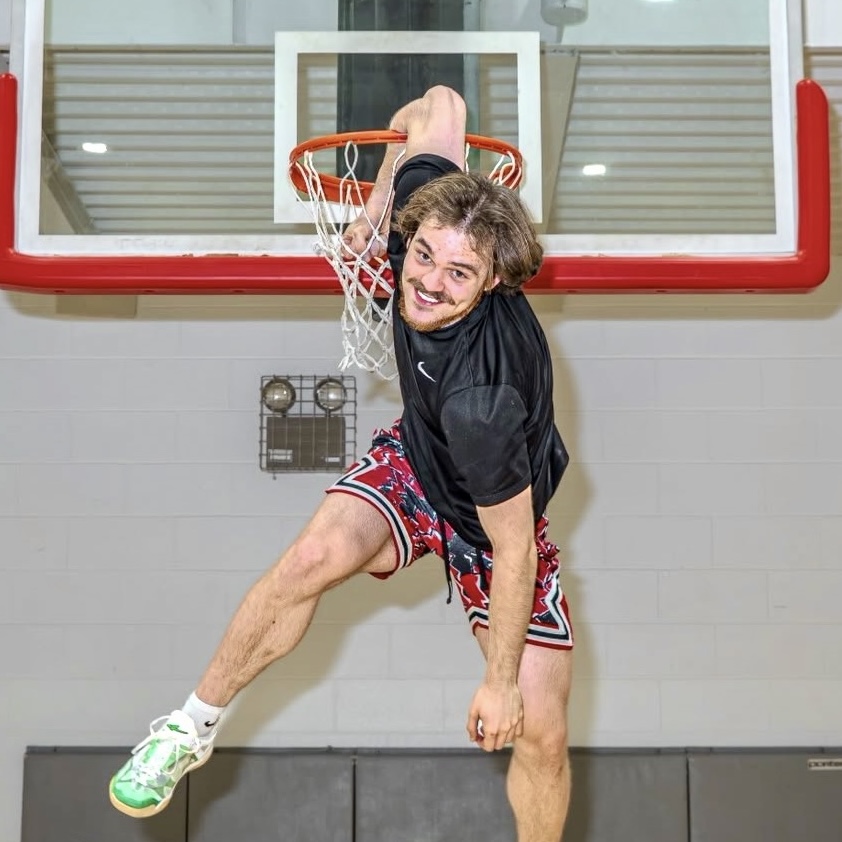
I had watched Cam Hazzard dunk online for months, but seeing him in person at the first night of Shaq’s DunkMan League was a different thing. Ben Hopkins, Dylan Haugen and I drove from North Carolina to Atlanta to watch Group Stage A, and I came away thinking about the dunks, the event, and how much it matters to see this sport up close.
This is the drive-home conversation Dylan and Ben and I recorded after the show. Watch our Dunk Talk episode here.
The same dunk looks different in person
Cam was one of the first people I really wanted to see. I had watched his videos, but this was my first time seeing him dunk in person. You can get desensitized to clips when you watch them on a phone. In warmups he walked up and threw down a reverse 360 East Bay like it was a layup. Then he started the competition with a reverse 360 windmill where the ball hit the ground before he did. I was standing right there, and it was hard to process how much time he had in the air.
That is the part a video cannot fully give you. You can see the dunk, but being there lets you feel the speed, the space, and the way a whole crowd reacts. Doug Anderson’s first dunk was a windmill elbow that he punched so hard he hit the rim with his bicep. Joel Henry’s reverse 360 East Bay off a lob looked even more difficult from under the hoop. Those guys were impressive on screen already. In the arena, the distance and power felt completely different.
DunkMan also made the dunking the main event. We had time to watch warmups, meet the athletes, and see them get a real stage. The crowd was close enough to feel part of the night, and Shaq was right there reacting to dunks and talking with people afterward. It felt like an event built around dunkers, which is what you want if the sport is going to grow.
Why I went to see dunkers in the first place
I used to do dunking for fun and never thought I could be a pro. Then Isaiah Rivera and Jordan Southerland competed about an hour and a half from me. I went to watch, saw that they were real people with similar builds and reaches, and started thinking about what might be possible if I worked at it. That night changed how seriously I took dunking. I’ve been a professional for a few years now, and it began with making the effort to see a dunk contest in person.
The community side matters just as much. I had never met Joel Henry before this event. He was welcoming right away, and after he used me in a couple of dunks, it felt like we had known each other longer than a few minutes. That is how a sport gets stronger: you meet the people you’ve only seen online, talk about the same thing you love, and leave with friends who can keep you motivated.
I was also glad to come back to the original DunkMan venue with Ben. We had both been part of the first version of the show, when it was a one-off, and now the league had brought professional dunking back to the same place on a much bigger stage. Seeing that change in person made the future feel more real.
Go watch the people you follow
If you love dunking and have a chance to see a contest or show, go. Watch the warmups, meet the dunkers afterward, and talk to them. You get motivation from seeing what is possible, and you also realize these people are approachable. That can turn an online follow into a real connection, and sometimes a new opportunity.
I’ve talked before about how seeing pros changed my path. The same thing can happen for you. You do not need to be the best dunker in the building to get something from being there. Show up, enjoy the night, and let the energy push you to keep working.
I also write about the people I train and travel with in the North Carolina Dunk Squad. Seeing dunkers connect in person is one of the best parts of this community.