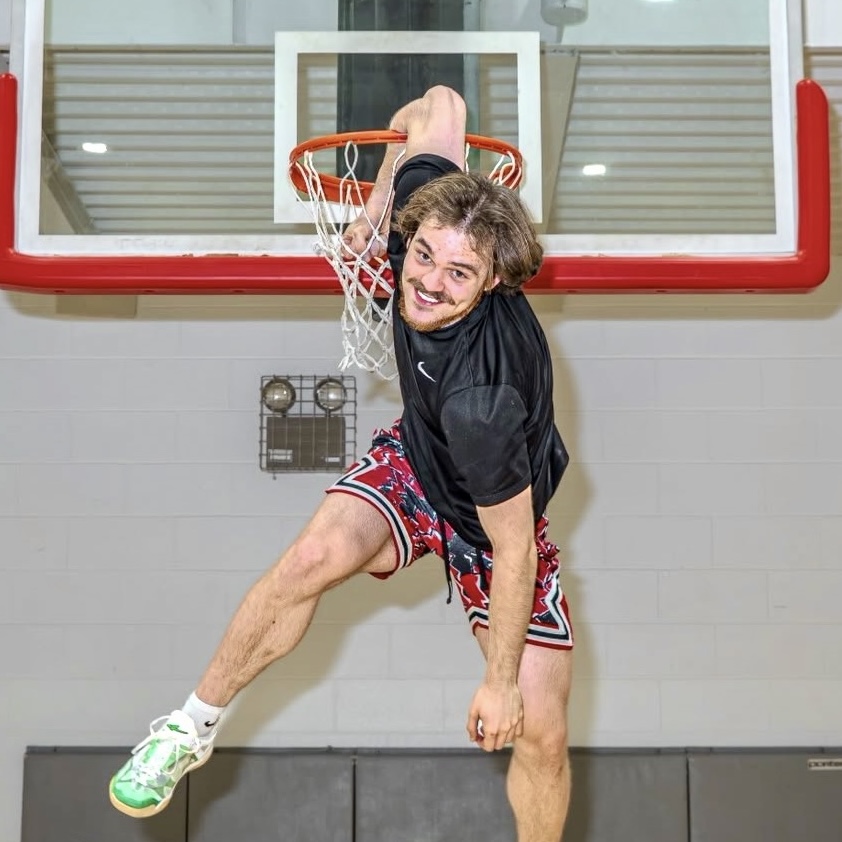
I used to post my dunks because I wanted to document them. I would make a mix, share a few clips, and hope other dunkers found it. That is still part of what I do, but I learned that dunking by itself speaks to a pretty small audience. If I want more people to find the sport, I have to make the video work for people who did not already care about dunking.
Dylan Haugen, Ben Hopkins and I talked about that in this episode of Dunk Talk. Watch our conversation about short-form content here.
Start with people who do not know you
When I post a video, I try to remember that most of the people who see it have never met me or watched me dunk. They need a simple reason to stay. A dunk mix can mean a lot to another dunker, but a broader basketball idea can reach people who are not already in that small circle. I started following trends and making videos that connected basketball to dunking. The dunk is still the point, but it is easier to find when the idea makes sense to a wider audience.
I still like making carousel posts that show the progress without turning every clip into a trend. Those posts may not travel as far, but they give dunkers a place to see the attempts, makes and sessions together. I want people who care about dunking to be able to follow the work, even when a quick video is built for everybody else.
It also helps to treat each post like someone’s first time seeing you. Keep the idea clear, make the footage easy to watch, and do not assume people know the dunk or the person doing it. A short caption or a repeated format can be useful if it works. I have used the same kind of progress video more than once because people are not all on the app at the same time. Most viewers are new to you, even if you have posted something similar before.
Make the video easy to watch
The small details matter. A clear camera angle helps people see the whole approach and the dunk. If the phone is too far away or zoomed in, the action gets hard to follow. Color is another easy improvement. I helped Dylan adjust the color on a Hide and Seek video that looked washed out, and he later told us it did millions of views on Facebook. If you are going to post a dunk, take a minute to make the footage look clear.
Cut the time before the dunk and the dead space after it. A viewer does not need to watch you dribble for several seconds before you run up. When the dunk lands, move on. Use readable text and keep it simple enough to understand without stopping the video. Then look at the retention graph. If viewers leave at a specific second, go back and see what was happening. Maybe the video started too slowly, or maybe there was a long pause you did not notice.
There is more than one way to make it work
Ben’s style is different from mine. He writes and researches longer talking videos, combines his interest in science with dunking, and builds toward an answer. He talked about using more than one hook, earning trust with evidence and giving the viewer a reason to stay until the end. My videos are usually quicker and more repetitive. Both approaches can work if the viewer gets something out of them.
Dylan and I have also talked about why dunkers should make long-form content. Short videos help people discover you. Longer videos give them a way to know you and follow the process. You do not have to choose one format for everything.
The main thing is to keep posting and keep learning. Do not let the search for a perfect edit keep you from putting a good video out. If one format works, figure out why and try it again. If it does not, make one small change. I have taken a break and watched my YouTube views fall off, so I know it can take time to get moving again. Stay consistent, make the footage clear, and keep experimenting. The videos should still feel like you, and the people who find you should have a reason to come back.
If you want to see how I built my approach to documenting sessions, start with the story behind my dunk journey.